PM Surya Ghar: what the central subsidy actually pays
The central subsidy for rooftop solar is a fixed amount per kilowatt, not a percentage of your quote — and it stops at three kilowatts. Here is what that means in rupees.
Tersus Energy2 min read
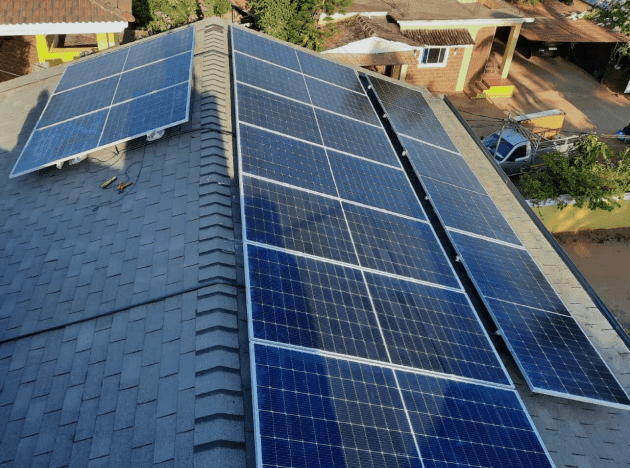
Most people meet PM Surya Ghar: Muft Bijli Yojana as a headline number and assume it scales with the size of the system. It does not. The Central Financial Assistance is a fixed rate for the first three kilowatts, and nothing beyond that.
The slabs
- ₹30,000 per kW for the first 2 kW
- ₹18,000 for the third kW
- Nothing for anything above 3 kW
So the subsidy is ₹30,000 on a 1 kW system, ₹60,000 on 2 kW, and ₹78,000 on 3 kW — which is also the ceiling. A 5 kW system and a 10 kW system both receive the same ₹78,000.
Group housing societies and residents' welfare associations are treated separately: ₹18,000 per kW for common facilities, up to 500 kW.
Why the cap matters when you size a system
The cap changes the shape of the decision. Going from 2 kW to 3 kW costs you the difference in hardware but brings ₹18,000 back. Going from 3 kW to 4 kW brings nothing back, so that kilowatt has to justify itself on generation alone.
That is not an argument for stopping at 3 kW. A system sized to your actual consumption pays for itself through the bill it removes, and the subsidy is a discount on the way in rather than the reason to build. It is an argument for knowing which part of your quote the government is covering before you sign it.
The loan window
The scheme comes with a collateral-free loan through public sector banks, applied for on the JanSamarth portal:
- up to ₹2 lakh for systems of 3 kW or less
- up to ₹6 lakh for systems between 3 kW and 10 kW
- around 6.75% a year, with tenures up to 10 years
Systems above 10 kW fall outside this window entirely. For loan cases redeeming on or after 14 August 2026, the subsidy is credited straight to the loan account rather than to you.
The deadline
Applications close on 31 March 2027. That is the date the application has to be in by, not the date the system has to be commissioned — but the two are close enough together that leaving it late is a real risk.
What to check on a quote
- Is the subsidy shown as a deduction, or as something you claim back later? It is the latter — it reaches you after commissioning and inspection.
- Does the quoted subsidy exceed ₹78,000? If it does, either the quote includes state assistance as well, or it is wrong.
- Is the vendor registered on the national portal? An unregistered installation does not qualify, whatever else is promised.
Every figure here comes from the national portal. If a quote you are holding disagrees with it, the portal is the one that counts.

